
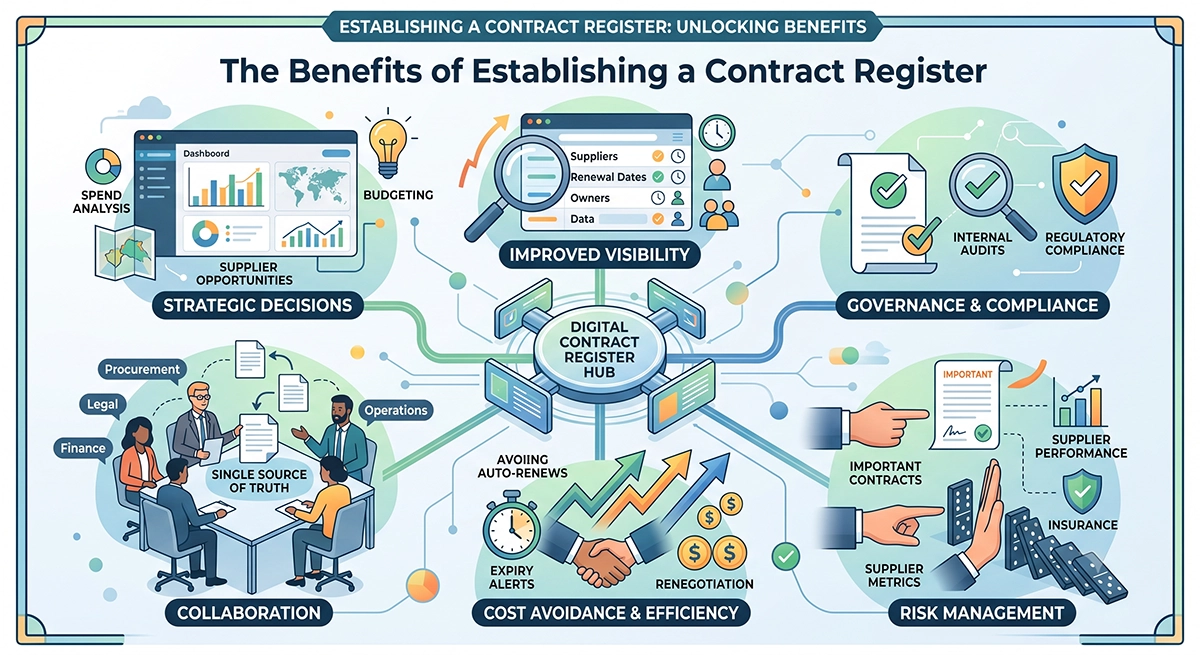
A contract register is a central repository containing key information about an organisation’s contracts. It provides a single source of truth for commercial, procurement, legal and operational teams, enabling them to manage contractual obligations effectively throughout the contract lifecycle.
One of the primary benefits of a contract register is improved visibility. By maintaining accurate information on contract values, suppliers, renewal dates, notice periods, and contract owners, organisations can quickly identify which contracts are in place, who is responsible for them, and when key actions are required. This reduces the risk of contracts being overlooked or managed inconsistently.
A well-maintained register also helps organisations avoid unnecessary costs. Automated reminders of expiry dates and notice periods allow sufficient time to review supplier performance, renegotiate commercial terms or undertake competitive procurement exercises. Without this visibility, contracts can inadvertently auto-renew, potentially locking organisations into unfavourable pricing or outdated arrangements.
From a governance perspective, a contract register strengthens compliance and accountability. It provides evidence that contracts are being managed appropriately, supports internal and external audits, and helps demonstrate compliance with procurement regulations, corporate policies and contractual obligations. Senior management also gains greater assurance that commercial risks are being actively managed.
Contract registers are equally valuable for risk management. They enable organisations to identify high-value or business-critical contracts, monitor supplier performance, track insurance and certification requirements, and ensure contractual obligations are fulfilled. This reduces the likelihood of disputes, service failures and financial exposure.
The register also supports better commercial decision-making. Accurate contract data enables organisations to analyse supplier spend, identify opportunities for contract consolidation, plan future procurement activities and forecast upcoming renewals. This information assists budgeting, resource planning and strategic sourcing initiatives.
Finally, a contract register improves collaboration across departments. Procurement, legal, finance and operational teams all have access to consistent, up-to-date information, reducing duplication of effort and improving communication throughout the contract lifecycle.
In today’s increasingly complex commercial environment, a contract register is far more than an administrative tool. It is a key component of effective contract management, helping organisations reduce risk, improve compliance, realise better commercial outcomes and maximise the value delivered from their contractual relationships.
