
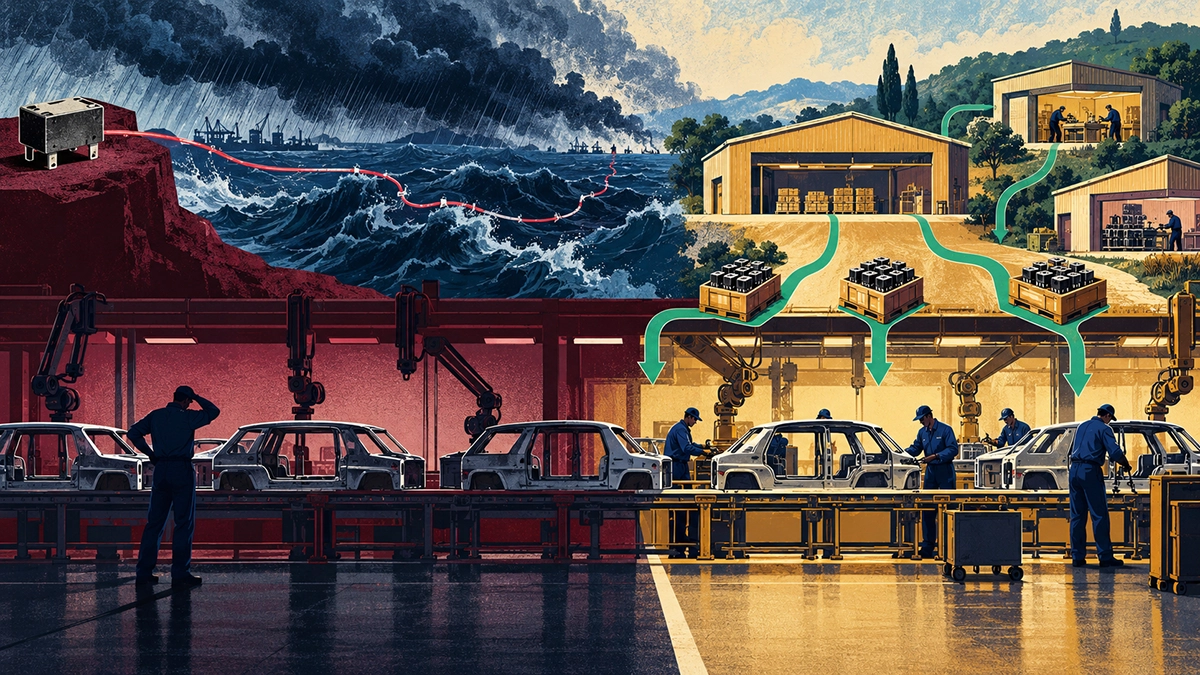
For decades, procurement functions have been under pressure to reduce cost.
There is nothing wrong with that.
The problem occurs when purchase price becomes confused with value
Recent Government policy provides an important reminder that resilience and security of supply can have significant economic value.
Government procurement guidance published during 2026 specifically recognises the importance of critical sectors and secure supply chains. It highlights areas including steel, shipbuilding, artificial intelligence and energy infrastructure as capabilities with wider strategic significance.
This is an important lesson far beyond central government procurement.
Consider a component that Supplier A can provide for £80 and Supplier B for £100.
Supplier A appears cheaper.
But suppose Supplier A:
– manufactures on another continent;
– depends upon one critical sub-supplier;
– has a twelve-week lead time;
– carries minimal UK inventory; and
– has no practical alternative manufacturing source.
Supplier B has UK stock, multiple sources and can replace a failed component within 24 hours.
Which represents better value?
The answer depends upon the consequences of supply failure.

This is why procurement professionals should understand the difference between price and whole-life commercial value.
Before awarding strategically important contracts, buyers should be asking:
Where does our supply chain actually extend?
Which components are single-source?
Where are the critical dependencies?
How quickly could we switch supplier?
Who owns the intellectual property, tooling or data required to change supplier?
What happens if a critical supplier becomes insolvent?
And perhaps most importantly:
What would supply failure cost the organisation?
Supply-chain resilience cannot simply be added after contract award.
It needs to influence the sourcing strategy, specification, evaluation methodology and contractual arrangements. Government has also stated that procurement should play a role in strengthening UK supply chains and economic resilience.
The wider commercial lesson is straightforward.
The cheapest supply chain is not necessarily the lowest-cost supply chain when something goes wrong.
DPSS Training
DPSS procurement and supply-chain courses examine practical approaches to supplier selection, supply-chain risk, specifications, evaluation, supplier relationship management and contract management.
Effective procurement isn’t simply about negotiating today’s price.
It is also about protecting tomorrow’s supply.
